EVTAURUS
Type1 Socket Inlet
Vehicle Side Inlet
16A,32A
250V/480V
| Availability: | |
|---|---|
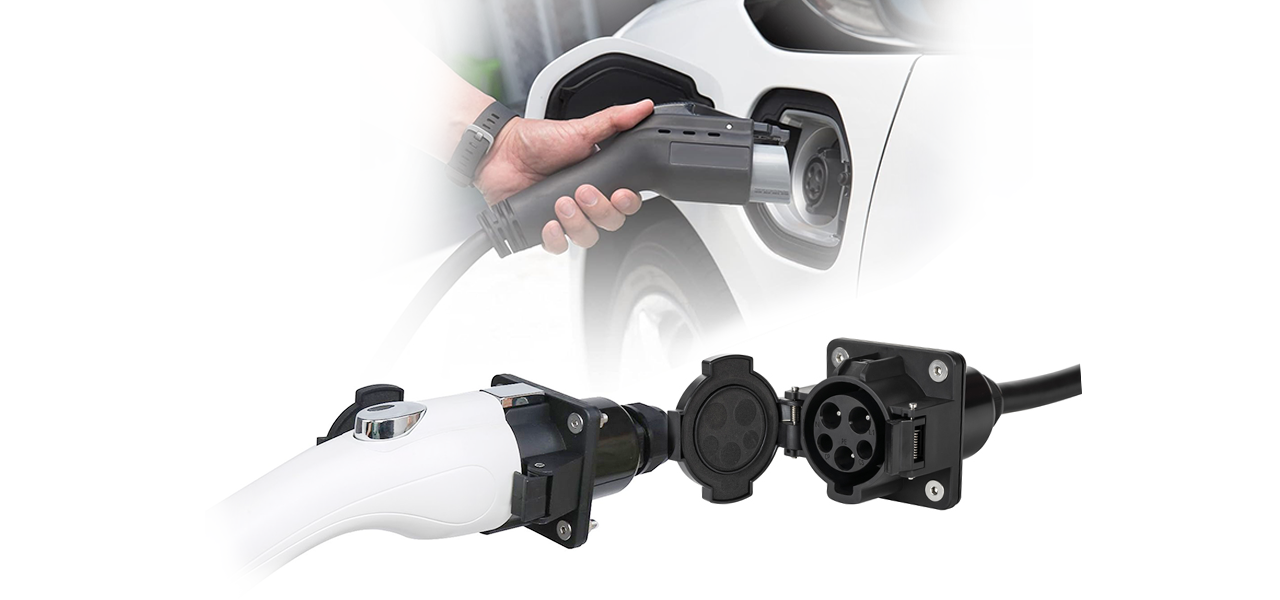
The EVTAURUS Type 1 EV Socket is a universal
single-phase 240V charging adapter designed for Level 2 electric vehicle charging.It supports 16A and 32A currents, features UL94-V0 flame retardant thermoplastic construction, and boasts an IP54 rating for dust and water resistance. Certified by CE, TUV, and SAE J1772, this socket ensures high safety and durability across a wide temperature range, making it an ideal choice for reliable EV charging.

Compatible with Type 1 EV charging systems
Rated current: 30A–32A, Voltage: 120–240V AC
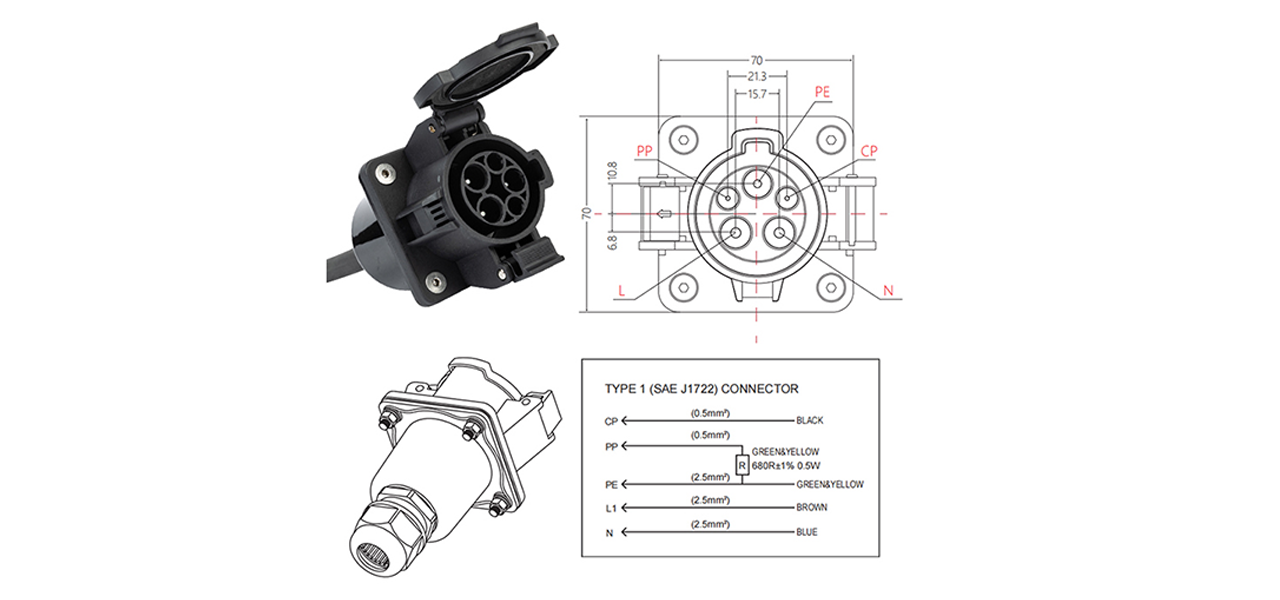
5-pin design (L, N, CP, PP, PE)
Protection Grade: IP54 (when mated)
High insulation resistance (>1000MΩ) and low contact impedance
Reliable performance under vibration and temperature variations (-30°C to +50°C)

The EVTAURUS Type 1 EV Socket is a universal
single-phase 240V charging adapter designed for Level 2 electric vehicle charging.It supports 16A and 32A currents, features UL94-V0 flame retardant thermoplastic construction, and boasts an IP54 rating for dust and water resistance. Certified by CE, TUV, and SAE J1772, this socket ensures high safety and durability across a wide temperature range, making it an ideal choice for reliable EV charging.

Compatible with Type 1 EV charging systems
Rated current: 30A–32A, Voltage: 120–240V AC
5-pin design (L, N, CP, PP, PE)
Protection Grade: IP54 (when mated)
High insulation resistance (>1000MΩ) and low contact impedance
Reliable performance under vibration and temperature variations (-30°C to +50°C)

1. What vehicles are compatible with this J1772 Type 1 adapter?
This adapter is compatible with a wide range of electric vehicles, including the Nissan LEAF, Chevy Volt, BMW i3, Toyota Prius Plug-In, Tesla Model S (with Tesla charging adapter), and many others. Please check the vehicle compatibility list for more details.
2. Do I need a special adapter for Tesla vehicles?
Yes, Tesla vehicles require a Tesla charging adapter to use this J1772 Type 1 adapter.
3. What is the charging capacity of this adapter?
The adapter supports 50A charging, providing fast and efficient Level 2 charging for your electric vehicle.
4. Is this adapter suitable for outdoor use?
Yes, the adapter has an IP54 rating, making it resistant to dust and water splashes, so it can be used outdoors in various weather conditions.
5. How long is the cable?
The cable is 1 meter in length, providing enough reach for convenient installation at your charging location.
6. Is this adapter compatible with single-phase power?
Yes, this adapter is designed for single-phase power systems, making it ideal for both residential and commercial installations.
7. Is the cable certified?
Yes, the included cable is UL/TUV certified, ensuring high safety standards and reliable performance.
1. What vehicles are compatible with this J1772 Type 1 adapter?
This adapter is compatible with a wide range of electric vehicles, including the Nissan LEAF, Chevy Volt, BMW i3, Toyota Prius Plug-In, Tesla Model S (with Tesla charging adapter), and many others. Please check the vehicle compatibility list for more details.
2. Do I need a special adapter for Tesla vehicles?
Yes, Tesla vehicles require a Tesla charging adapter to use this J1772 Type 1 adapter.
3. What is the charging capacity of this adapter?
The adapter supports 50A charging, providing fast and efficient Level 2 charging for your electric vehicle.
4. Is this adapter suitable for outdoor use?
Yes, the adapter has an IP54 rating, making it resistant to dust and water splashes, so it can be used outdoors in various weather conditions.
5. How long is the cable?
The cable is 1 meter in length, providing enough reach for convenient installation at your charging location.
6. Is this adapter compatible with single-phase power?
Yes, this adapter is designed for single-phase power systems, making it ideal for both residential and commercial installations.
7. Is the cable certified?
Yes, the included cable is UL/TUV certified, ensuring high safety standards and reliable performance.
1. The Need for Scalable Multi-Vehicle ChargingModern charging sites often face challenges such as:Limited grid capacityIncreasing number of EVsHigh utilization during peak hoursThe need to maximize return per parking spaceA scalable EV charging system allows operators to serve more vehicles without
Typical Electric Vehicle Range Per ChargeModern electric vehicles have come a long way from earlier generations, offering significantly improved driving ranges. According to industry benchmarks:Most current EVs have a range of 200–300 miles (320–480 km) on a full chargeLong-range models can achieve
As new energy vehicles rapidly increase in number, the demand for DC fast charging stations keeps growing. Charging stations with the same power output can vary in price by thousands or even tens of thousands of dollars. Some manufacturers provide lower prices, seemingly offering "the same features
The 4 Types of Electric Vehicles: Battery Capacity, Charging Power & Driving RangeElectric mobility continues to expand globally, and choosing the right EV depends heavily on understanding battery capacity, charging methods, and realistic driving range. This guide explains the four major types of el
The transition to electric mobility in Latin America is accelerating rapidly. However, successful charging infrastructure deployment must overcome unique regional obstacles: unstable grid quality, demanding physical security requirements, and rigorous scrutiny over Return on Investment ($\text{ROI}$
The global shift toward electric vehicles (EVs) has accelerated over the past decade, driven by concerns over climate change, rising fuel costs, and government incentives promoting sustainable transportation.
As electric vehicles (EVs) continue to gain popularity worldwide, the choice of charging technology becomes increasingly important for both individual drivers and fleet operators.
Electric vehicles (EVs) have become a cornerstone of modern transportation, offering a cleaner and more sustainable alternative to traditional internal combustion engine vehicles.
The electric vehicle (EV) industry is expanding rapidly worldwide, fueled by environmental concerns, advancements in battery technology, and supportive government policies. As the number of EVs on the road continues to increase, the demand for fast, reliable, and efficient charging solutions has gro
As electric vehicles (EVs) continue to gain popularity, the need for fast and reliable charging infrastructure becomes increasingly critical.
This project was initiated by a commercial charging operator in Eastern Europe. The client planned to deploy a series of public charging stations with strong brand recognition, suitable for urban street and public parking scenarios. To enhance visual identity and attract more young and female driver
Choosing the right Type 2 to Type 2 charging cable is essential to ensure efficient charging, safe use, and long-term durability. Here are the main factors you should consider before purchasing:1. Confirm Your Vehicle’s Maximum AC Charging PowerEVs have different on-board charger capacities. Even if
1. IntroductionCHAdeMO is a DC fast-charging standard developed by the CHAdeMO Association around 2010. It was widely used in Japan, Europe, and parts of North America—most notably in early EVs such as the Nissan Leaf.However, as the global EV industry pushes toward unified and high-power charging s
EVTAURUS successfully delivered 15 customized battery energy storage charging stations to a European client. The chargers were fully OCPP-compliant, integrated with the client’s platform for remote monitoring and billing.Product FeaturesBuilt-in energy storage – no need for a new transformerPeak-sha
Since early 2024, EVTAURUS has established a long-term partnership with a leading local energy company in Cambodia, aiming to accelerate the development of EV charging infrastructure in the region. This collaboration supports Cambodia’s growing demand for electric vehicle charging solutions and refl
To meet the growing demand for EV charging, a commercial parking lot recently completed the installation of 23 AC chargers, including both 22kW and 44kW units. EVTAURUS provided a comprehensive AC charging solution that fits various parking environments and charging needs.Installed Equipment:22kW AC
These pedestal-type AC chargers are fully OCPP-compatible, enabling seamless integration with the customer’s existing EV charging management platform.Project HighlightsDual-Gun Design: Supports charging two electric vehicles at the same time, maximizing charging efficiency and space utilization.OCPP
If you're new to the world of electric vehicles (EVs), you've likely heard whispers of the "80% rule." This widely discussed guideline suggests you should usually stop charging your EV's battery once it reaches 80% capacity. But why leave 20% on the table?
As more and more people adopt electric vehicles (EVs), worries about battery charging speed have intensified. Although DC fast charging is considered the quickest option, there’s more flexibility and cost efficiency with AC fast charging.So, what is AC fast charging, how is it different from DC char
Pulling into a charging station only to find the plug doesn’t fit your car is a rite of passage for many new electric vehicle (EV) drivers. This frustrating experience highlights a key challenge in the EV world: not all charging plugs are the same. This is where an EV adapter becomes an essential to
Copyright © 2023 Nanjing Jiutai Information Technology Co., Ltd. All rights reserved. | Sitemap | Privacy Policy | Supported by leadong.com